
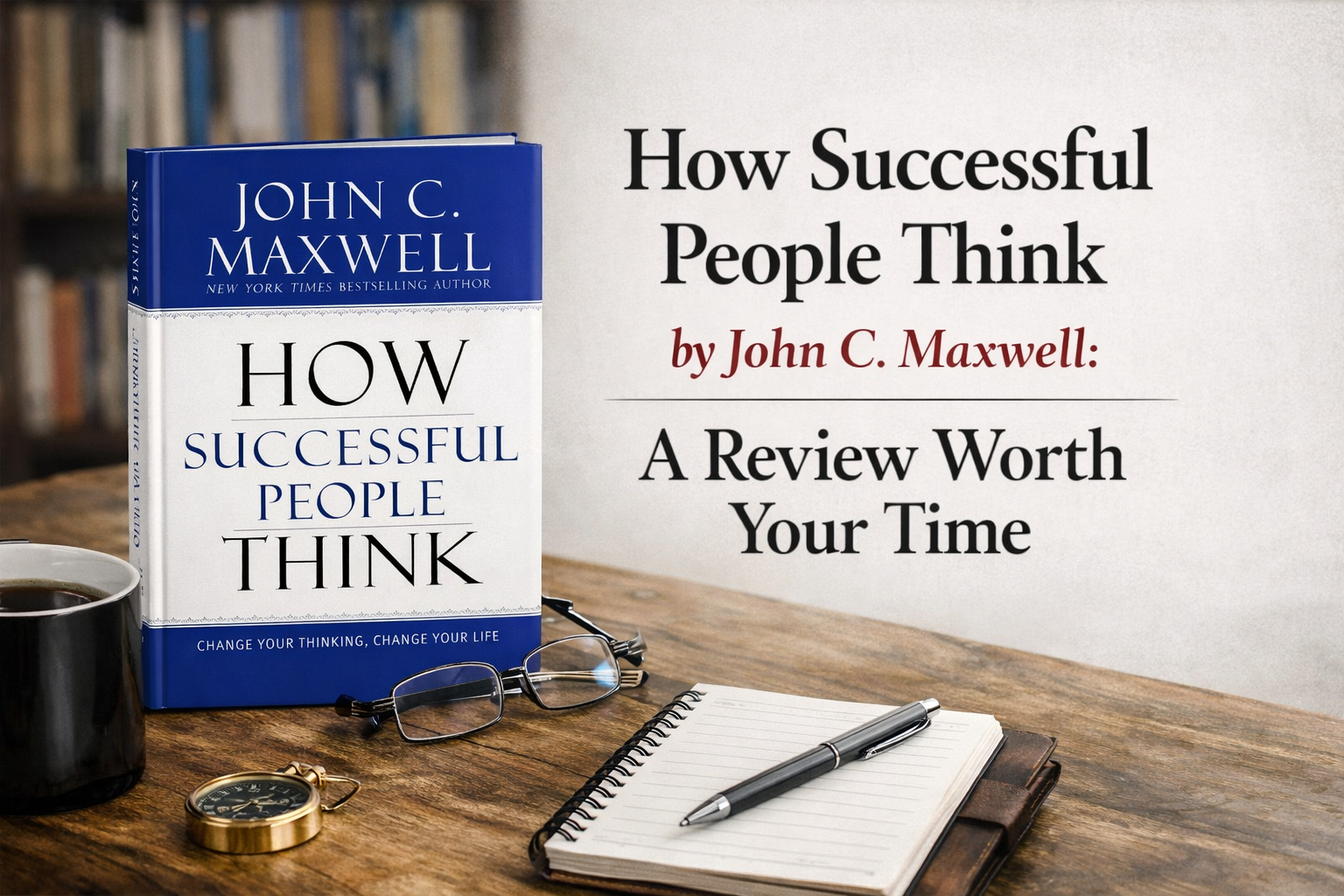
Book Author: John C. Maxwell
Book Chapters: 11 chapters
How to get your copy: Available on Amazon at $12.99
Have you ever looked at someone who seems to accomplish twice as much as everyone else and wondered what their secret is?
It probably isn’t luck. It’s also not just talent or connections.
According to John C. Maxwell, it comes down to one thing: how they think.
How successful people think is not a mystery reserved for the elite few. It is a learnable, repeatable set of mental habits that anyone can adopt. That is the entire premise of this book, and it delivers on that promise in a way that is refreshingly direct and deeply practical.
In How Successful People Think, Maxwell distills decades of studying high achievers into 11 thinking styles that separate those who thrive from those who merely survive.
Let’s dig in.
Table of Contents
The Big Idea Behind How Successful People Think
Maxwell opens the book with a bold claim: the single thing all successful people have in common is not their background, education, or IQ, it is how they think.
He has studied successful people for over 40 years and this conclusion sits at the heart of everything he teaches.
The book does not tell you what to think. It teaches you how to think. That distinction matters more than it sounds.
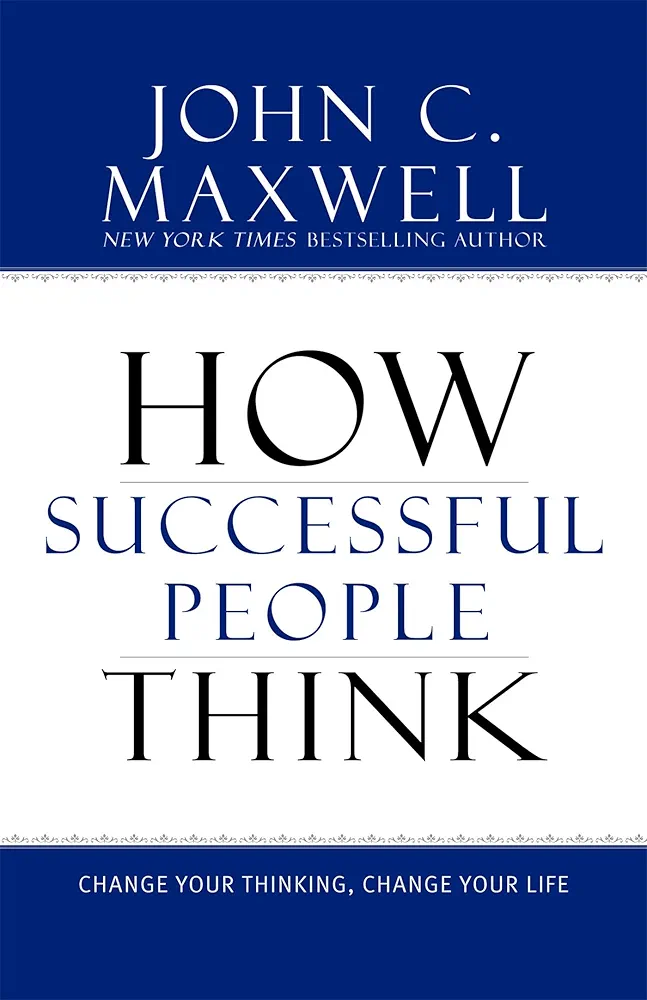
Most self-help books try to hand you a mindset package, think positive, be grateful, hustle harder. But How Successful People Think takes a completely different approach. It breaks down the actual mental processes behind breakthrough decisions, creative solutions, big visions, and lasting results.
Maxwell writes from personal experience throughout. He admits his own blind spots, shares his growth journey, and gives you the impression that this man has actually lived everything he’s teaching.
“If you change your thinking, you can change your life.” — John C. Maxwell
That line opens the book. And by the time you finish reading, you believe it.
11 Thinking Styles That Change Everything
Here is a breakdown of the 11 types of thinking Maxwell unpacks in How Successful People Think:
1. Cultivate Big-Picture Thinking
Successful people refuse to get trapped inside their own small world.
Big-picture thinking means seeing beyond your immediate needs, your current role, and your present circumstances.
Maxwell says big-picture thinkers learn continually, listen intentionally, look expansively, and live completely. They see connections others miss.
2. Engage in Focused Thinking
Contrary to what hustle culture tells you, multitasking is the enemy of excellence.
Maxwell argues that focused thinking, giving one thing your undivided mental energy, is what separates good results from great ones. Removing distractions is not optional; it is the price of high performance.
3. Harness Creative Thinking
You do not have to be born creative. Creativity, Maxwell explains, is not original thinking. It is the art of combining existing thoughts in new ways.
Creative thinkers value ideas, embrace ambiguity, and are not afraid to look foolish. The greatest breakthroughs in history came from people willing to think differently.
4. Employ Realistic Thinking
Hope is not a strategy. Maxwell is clear about this. Realistic thinking forces you to look at the facts honestly, prepare for worst-case scenarios, and build plans grounded in truth rather than wishful thinking.
Far from being pessimistic, realistic thinking actually builds confidence because you are no longer caught off guard.
5. Utilize Strategic Thinking
This is planning on a deeper level. Strategic thinkers do not just make to-do lists, they connect daily actions to long-term goals.
Maxwell shares how he plans 40 days at a time, blocks thinking time on his calendar, and never confuses movement with progress.
6. Explore Possibility Thinking
Where others see walls, possibility thinkers see doors.
This chapter challenges you to dream bigger, stop letting so-called experts talk you out of your vision, and believe that the word impossible is rarely as final as people think it is.
Maxwell uses George Lucas and Rudy Giuliani as powerful examples of what happens when you refuse to accept limits.
7. Learn From Reflective Thinking
Reflection is the Crock-Pot of the mind. It is slow, it requires solitude, and it is absolutely worth it.
Maxwell challenges the fast-paced culture that celebrates action over contemplation. Reflective thinking turns raw experience into wisdom, and wisdom into better decisions.
8. Questioning Popular Thinking
Just because everyone believes something does not make it right.
Maxwell makes a sobering case for why popular thinking often produces average results.
Groupthink killed innovation. Standing apart requires courage, but that courage is precisely what sets great thinkers apart from the crowd.
9. Benefit From Shared Thinking
No one is as smart as all of us. This chapter punctures the myth of the lone genius.
Shared thinking is faster, more innovative, and produces stronger results than solo thinking. Maxwell gives practical advice on who to include in collaborative thinking sessions and how to make those conversations count.
10. Practice Unselfish Thinking
This chapter redefines success. Unselfish thinking, putting others first, giving without needing recognition, investing in people, does not just make you a better person. It produces a return that self-centered thinking never can.
Maxwell points to Alfred Nobel’s story as proof that even the most driven achievers can redirect their lives toward something greater.
11. Rely on Bottom-Line Thinking
Know your bottom line. That is the core message of the final chapter. Whether you’re running a company, leading a family, or serving in a church, you must be crystal clear about what you are ultimately trying to achieve.
Frances Hesselbein’s transformation of the Girl Scouts organization is the most compelling case study in the book.
The Thinking Style That Surprised Me Most
Unselfish thinking!
Going into this book, I expected the usual goal-setting, discipline, big dreams, relentless focus. And those are all here.
But the chapter on unselfish thinking stopped me in my tracks.

Maxwell makes the case that thinking about others is not a detour from success, it is the deepest path to it. He challenges you to check your motives daily.
He points to Benjamin Franklin’s routine of asking every morning, ‘What good am I going to do today?’ and every evening, ‘What good have I done?’
That hit differently. It reminded me that how successful people think is not just about climbing higher — it is about lifting others as you climb.
In a world obsessed with personal branding and individual achievement, this chapter felt countercultural in the best way. It also felt very true.
What Maxwell Gets Radically Right
There are a few things this book does exceptionally well.
1. It respects your time: Each chapter is tight, focused, and ends with a thinking question that forces you to apply what you just read to your own life. These questions are not fluff. They are genuinely challenging if you take them seriously.
2. Maxwell writes from a place of earned authority: He is not theorizing. He has led organizations, mentored millions, and watched these thinking styles play out across industries and generations. The personal anecdotes feel lived-in, not manufactured.
3. The book is honest about growth being a process: Maxwell admits he avoided realistic thinking for years because he thought it would dampen his creativity. That kind of self-disclosure builds trust. You are not reading from a pedestal — you are learning from someone who has wrestled with the same tendencies you have.
4. The theology is woven in naturally without being heavy-handed: For readers with a faith background, you will feel seen without feeling preached at. For those without one, it will not alienate you. That is a hard balance to strike, and Maxwell manages it well.
Who Should Read How Successful People Think?

Honestly, almost anyone with a goal. But especially:
- Young professionals who feel stuck and want to level up their thinking
- Entrepreneurs who are working hard but not seeing the results they expected
- Leaders who want to build better cultures by modeling better thinking
- Students feeling overwhelmed by decisions and needing clearer mental frameworks
- Anyone going through a transition who needs a fresh perspective on their situation
If you have ever finished a long day feeling busy but not productive, this book will help you understand why, and what to do about it.
Final Thoughts: Is How Successful People Think Worth Your Time?
Absolutely. Without hesitation.
This is the kind of book that does not age. The principles Maxwell lays out in How Successful People Think are not tied to a trend, a technology, or a season. They are rooted in the enduring truth that the quality of your thinking determines the quality of your life.
There is a Thinking Question near the end of the book that reads: ‘Am I continually considering others and their journey in order to think with maximum collaboration?’ I am still sitting with that one.
Maxwell does not promise that reading this book will make you successful. What he promises is that changing how you think will change what you do — and what you do eventually changes your life. That is a promise this book earns.
If you have been waiting for a sign to invest in your mind, this is it.

I’m Happiness Hassan, the founder of Inspiring Guide—A personal development blog that empowers you to become the best version of yourself!
Meet the Author
Happiness is also an SEO content writer and strategist with over 7 years of experience helping brands boost visibility, engagement, and sales.
Whether it’s keyword research, crafting content, or fine-tuning on-page and off-page strategies, I’ve got you covered. My goal is beyond driving traffic but making your users experience a win-win for everyone!
On the coaching side, I’ve trained countless writers to turn their passion into profitable SEO careers. I help them navigate the SEO path, standing out in even the toughest niches and cashing in on their skills.
When I’m not geeking out over SEO, you’ll find me deep in the world of self-development. As a dedicated student of continuous growth, I write about my growth journey, sharing insights to help others unlock their potential. So, if you’re looking for a little push to become your best self, stick around—I’ve got you covered!


0 Comments